
Artificial intelligence is changing how organisations operate, but one question remains older than the technology itself. Before a system acts, who has decided what should happen, why it should happen, and under what conditions that action can be trusted?
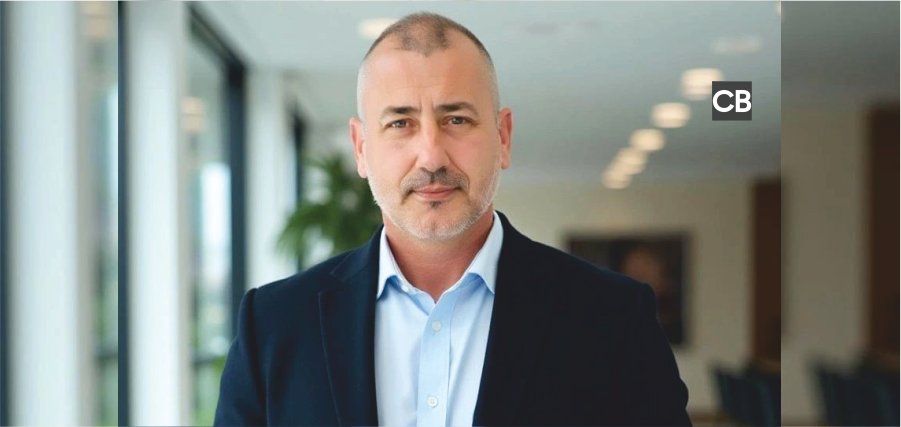
For Chris Kechagias, Governance Solution Architect, Founder of Governance Formation™ and Author of Governance Five™ ©, that question is at the heart of responsible organisational leadership.
His work challenges a growing assumption in the technology era that stronger systems, better controls and more sophisticated automation automatically produce better decisions. They do not. Technology can execute at extraordinary speed, analyse enormous quantities of information and identify pathways that humans may overlook. Yet capability does not equal authority.
That distinction has shaped nearly three decades of Kechagias’s professional journey across civilian and government procurement, commercial governance, security, risk and technology implementation. It has also become the foundation of a governance philosophy that began long before the current AI conversation.
His central question is deceptively simple.
How did organisational reliance become acceptable?
The question reaches beyond compliance. It asks how an organisation forms a governing position, establishes authority, considers consequences, incorporates evidence and alternatives, and creates the conditions under which people, suppliers, systems and technology can legitimately rely upon a decision.
Today, that thinking is expressed through Governance Formation™ and Governance Five™ ©, supported by the wider architecture of Governance Operationalisation™, decision and governance records, runtime governance and AI governance services. Yet the underlying method did not begin with artificial intelligence. It began with people.
A Career Shaped by the Reality of Decision Making
Kechagias’s professional experience spans approximately 30 years. Working across procurement, commercial environments, security, risk and technology implementation exposed him to a recurring organisational challenge.
Authority, expertise and accountability can be distributed across many individuals and functions, while the organisation still needs a clear governing position that everyone can understand and rely upon.
The problem becomes especially visible in complex environments where legal teams, procurement professionals, technology specialists, risk functions, executives, suppliers, representatives and end users all have legitimate interests.
Each can contribute something valuable. Yet contribution does not automatically confer authority.
This distinction became particularly significant during Kechagias’s independent work from 2010 onward. The work that would later be formally expressed through Governance Formation™ and Governance Five™ © was being developed and applied across multi-stakeholder environments involving consumers, representatives, industry participants and suppliers.
Between 2010 and 2014, 47 documented community and member-based initiatives formed part of that early practical application across four Australian states.
The method came first. Power Group Purchasing™ was named later to reflect the philosophy already embodied in the work. Power Group represented collective strength through coordinated participation without displacing legitimate individual or organisational authority. Purchasing reflected the original commercial context in which the model was applied.
The principle, however, proved much broader than purchasing.
Capability could be coordinated and amplified while authority remained with the accountable person or organisation.
That insight would eventually become one of the defining ideas behind Kechagias’s approach to modern governance.
When Participation Meets Authority
The practical environments associated with Power Group Purchasing™ brought together people with very different roles. They could include volunteer community representatives, resident and progress associations, professional and member organisations, councils, industry participants, suppliers and individual consumers.
The Police Association of South Australia and the Police Association of Victoria were among the environments associated with initiatives in the public record, alongside wider community initiatives.
Each participant could contribute something different.
Representatives could articulate concerns. Associations could represent members. Councils could support engagement. Industry participants could contribute market knowledge. Suppliers could present commercial propositions. Power Group Purchasing™ could manage the governance and procurement process.
But none of those roles displaced the authority of the person ultimately responsible for the decision.
This distinction became a foundational lesson.
Participation, expertise, representation, leadership and authority are connected, but they are not interchangeable.
The practical task was to bring legitimate contributions together, establish a clear governing position, translate that position into procurement and supplier engagement, and preserve the authority of those responsible for the final decision.
For Kechagias, this experience revealed a constitutional problem that now appears in enterprises everywhere.
Modern organisations increasingly rely on interconnected teams, external providers, automated workflows and artificial intelligence. The number of contributors to consequential decisions is increasing, but the need for clear authority has not disappeared.
If anything, it has become more important.
Turning Human Priorities into Governed Decisions
The early work also demonstrated why governance cannot be reduced to price, efficiency or technical compliance.
Household energy, for example, can directly affect affordability and family budgets. Consumers may encounter unfamiliar terminology, competing marketing messages and complicated commercial propositions. Without a structured process, people can become passive recipients of whatever the market places before them.
The Power Group Purchasing™ model approached the problem differently.
Instead of beginning with a supplier proposition and asking people whether they wanted it, the process began with the people who would live with the consequences.
Communities could identify what mattered to them. Affordability, service, transparency, market understanding, environmental considerations, community benefit and supplier engagement could all become part of the discussion.
Those priorities then informed procurement requirements, evaluation criteria and key performance indicators.
Suppliers were responding to a formed community position rather than simply competing on price.
In contemporary language, many of these outcomes align with stakeholder engagement, responsible procurement, social value and ESG-related considerations. For Kechagias, however, the important point was always the practical sequence.
Participation informed governing judgement. Governing judgement informed procurement. Procurement shaped evaluation and KPIs. Supplier responses could then be assessed against the formed position, followed by individual decisions, delivery, ongoing management, review and evolution.
Purchasing power could be aggregated.
Decision authority could not.
That distinction remains central to his thinking today.
Governance Begins Before the Approval
Years of experience in commercial and procurement environments reinforced another principle.
Specifications, evaluation criteria, KPIs and contractual requirements are not merely administrative tools. They can carry governing judgement into implementation.
Before an organisation commits to a significant decision, Kechagias believes it should understand the matter, consequences, authority, participants, evidence, values, alternatives, trade-offs and conditions that must remain true after approval.
When those questions remain unresolved, procurement teams, suppliers, implementation teams or technology can begin answering questions that properly belong upstream.
That creates a dangerous reversal.
The governing position should shape implementation. It should not emerge accidentally from implementation.
This is where Governance Formation™ enters the conversation.
Forming the Position Behind the Framework
Most established organisations already have governance structures. They have boards, policies, delegations, legal advisers, risk functions, approval processes, controls, monitoring and assurance mechanisms.
Kechagias is not proposing that these structures be discarded.
His message is different.
Keep your governance. Examine the judgement underneath it.
Policies can establish boundaries, but they do not automatically resolve novel situations. Risk functions can identify exposure, but identifying risk does not by itself decide an acceptable trade-off. Approval can exercise authority, but approval alone may not explain how the recommendation became sufficiently formed.
Governance Formation™ addresses this upstream question.
What judgement has the organisation actually formed that makes reliance acceptable?
That requires consequence, authority, participation, evidence, alternatives, ethics, values, trade-offs and traceability to be brought together in a way that can support the organisation’s reliance on the resulting position.
Governance Five™ © provides a structured method for doing this through five connected movements.
Govern. Engage. Aggregate. Deliver. Evolve.
Govern establishes consequence, authority, duties and boundaries.
Engage structures participation and expertise.
Aggregate brings together evidence, assumptions, alternatives, risks, values and trade-offs.
Deliver carries the formed position towards implementation.
Evolve tests whether continued reliance remains supportable as circumstances change.
This final stage is increasingly important in an environment where systems, markets, technologies and organisational conditions can change rapidly.
When material change affects the basis upon which reliance was authorised, the organisation should not simply continue by default. It should return to governing judgement.
Kechagias describes this function through Governed Re-entry™.
From Governance to Operational Reality
The broader Governance Formation™ architecture has continued to evolve, but Kechagias sees continuity between its early practical application and its current enterprise focus.
Governance Formation™ provides the overarching discipline.
Governance Five™ © provides the structured method through which governing judgement is formed.
Governance Operationalisation™ carries the authorised position into implementation-ready organisational and technical requirements.
Downstream systems can then preserve, apply, observe and evidence that position during execution.
This thinking is also reflected in the connected record architecture he has developed.
The Decision-Time Reasoning Record, or DTRR™, captures consequence, evidence, assumptions, alternatives, values and trade-offs.
The Governance Judgement Record, or GJR™, records the authorised governing judgement.
The Governance Design Record, or GDR™, translates that judgement into implementation obligations, conditions and boundaries.
These formal artefact names did not exist in 2010.
The governance requirements did.
The underlying expectation was already clear. Reasoning needed to be understandable. Judgement needed to be legitimate. Implementation needed to remain faithful to what had been authorised.
That continuity now extends into enterprise governance, technology, automation, artificial intelligence and runtime governance.
The pathway is deliberate.
Formation leads to an authorised position. The authorised position becomes operationalised. Operationalisation guides execution. Execution produces evidence. Changing circumstances can trigger continued reliance or governed re-entry.
Why AI Makes the Question More Urgent
Artificial intelligence has not created the governance problem.
It has amplified it.
An AI agent may be capable of accessing another system, invoking a tool, identifying an alternative route, initiating a workflow or recommending a consequential action. Its technical capability, however, does not mean the organisation has authorised every pathway available to it.
This is where Kechagias sees one of the most important governance challenges of the coming decade.
Capability to find another path is not authority to take another path.
Traditional access controls may determine whether a machine identity can reach a resource. They do not necessarily demonstrate that the organisation formed the governing judgement that makes a particular action acceptable.
An AI system can satisfy a technical rule while still producing an outcome inconsistent with organisational values if those values were never incorporated into the authorised position.
As autonomous systems become faster and more distributed, the consequences of that distinction become more significant.
For leaders, the questions must therefore move beyond whether an AI system is technically controlled.
Who holds authority?
Who participated in forming the position?
What consequences, values, duties and assumptions were considered?
What may the system recommend, initiate, approve, escalate or stop?
When is human judgement required?
Does the human reviewer actually have the authority and information necessary to challenge the system?
What evidence should remain after execution?
And what happens when conditions materially change?
Most importantly, Kechagias asks one question.
What authorised governing position is this system actually operating against?
Human Oversight Must Mean More Than a Human in the Loop
The phrase human in the loop has become common in discussions about responsible AI. Kechagias believes the concept requires greater precision.
A human presence does not automatically create meaningful oversight.
The person reviewing an AI-generated recommendation must have sufficient authority, evidence, context and practical ability to challenge, escalate or stop execution. Otherwise, human oversight can become ceremonial rather than substantive.
The distinction reflects a broader leadership principle that Kechagias has carried throughout his career.
Leadership is not the same as authority.
A leader can convene people, clarify issues, surface difficult questions and improve judgement without appropriating authority that belongs elsewhere.
His early experience with Power Group Purchasing™ demonstrated this clearly. Representatives could influence judgement. Suppliers could contribute expertise. Power Group Purchasing™ could lead the process. Yet the authority of those ultimately responsible for decisions remained distinct.
That principle now becomes particularly important as AI systems gain greater autonomy.
Technology should not quietly inherit authority simply because it has the capability to execute.
Leadership Without Positional Authority
Some of Kechagias’s most significant leadership lessons came from environments where he needed to influence outcomes while formal authority remained elsewhere.
Commercial, procurement and multi-stakeholder environments require the ability to bring people together without confusing influence with decision rights.
His approach is grounded in precision.
He separates expertise from authority. The most technically knowledgeable person may not hold decision authority, while the person with authority may depend heavily on others to form sound judgement.
Strong collaboration allows people to contribute what they know without allowing expertise, hierarchy or technology to substitute for governing authority.
The same principle informs his approach to mentorship.
Rather than simply teaching someone to follow a process, he believes in helping people understand why a judgement is supportable.
His philosophical inspiration includes Aristotle, particularly the distinction between knowing that something is the case and understanding the reason why it is so.
For governance, the distinction is powerful.
Knowing that a decision was approved is not the same as understanding how the judgement supporting that decision was formed.
That deeper understanding becomes essential when organisations must defend consequential decisions, explain them to stakeholders or determine whether they should continue relying upon them as circumstances change.
The Human Side of Governance
Kechagias’s approach also recognises that governance is ultimately shaped by people.
An organisation may formally invite participation, challenge and dissent, yet suppress them culturally. In such an environment, a sophisticated governance framework can still produce weak judgement.
People need sufficient confidence and organisational permission to question assumptions, raise concerns and disagree constructively.
This becomes even more important in AI-enabled organisations.
Employees must be able to question automated recommendations. Risk professionals must be able to escalate concerns. Technical teams must understand when a system has reached the boundary of its authority. Executives must be prepared to revisit decisions when conditions change.
Governance, therefore, is not simply a collection of documents and controls.
It is an organisational capacity to form, authorise, preserve and revisit judgement.
Authority in an Age of Autonomous Systems
Kechagias believes leaders should resist the temptation to solve every AI governance challenge downstream.
Cybersecurity controls, model controls, guardrails, monitoring and assurance remain essential. Yet these mechanisms cannot indefinitely compensate for ambiguity in the governing position itself.
The stronger approach is to form judgement earlier.
Authority should be clearer. The reasoning behind consequential decisions should be preserved. Conditions should be explicit. Organisations should identify when changed circumstances require renewed judgement.
Ethics and values should not remain abstract statements in corporate documents. They should become operational through conditions, duties, escalation points and boundaries that remain meaningful while systems are executing.
This is particularly relevant as AI becomes embedded into enterprise workflows and interconnected technology ecosystems.
Over the next five to ten years, Kechagias expects technology to become increasingly capable of carrying, applying, constraining, observing, evidencing and verifying authorised governance.
What it should not become is the independent source of organisational authority.
The future is therefore not simply about humans versus machines.
It is about establishing a clearer relationship between human governing judgement and machine enabled execution.
Human governance forms and authorises the organisational position.
Technology operates against it.
Runtime systems can observe whether the conditions continue to hold.
If material change occurs, the system can trigger review, escalation or Governed Re-entry™.
That model creates an opportunity to reduce ambiguity without slowing innovation.
Clearer judgement can reduce rework, approval friction and downstream reinterpretation.
From Practical Governance to a Larger Mission
The development of Governance Formation™ has not been without challenges.
One has been explaining a problem that sits between established disciplines. Legal professionals may interpret it through law. Procurement professionals may see it through commercial governance. Technology professionals may focus on systems and controls. Risk professionals may approach it through exposure and assurance.
Kechagias’s response has been to become increasingly precise about what Governance Formation™ does and equally precise about what it does not do.
Another challenge has been persistence.
The governance problem existed before today’s AI debate. Technology has changed dramatically, but the fundamental question has remained remarkably stable.
How do different authorities, participants, interests, evidence, consequences, ethics, values and trade-offs become one governing position that others can legitimately rely upon?
That question now informs the wider development of his work through the Governance Formation Workspace™, practitioner resources and extensions into AI and runtime governance.
Governance Five™ © was submitted for patent protection in Australia in 2025 and remains Patent Pending.
In 2026, CIO Tech View recognised Kechagias among “The Most Visionary Leaders Shaping the Future in 2026,” acknowledging his work in organisational governance and AI governance.
His work now extends into enterprise governance architecture, governance solution authority and integrated runtime governance capability, supporting organisations as they translate authorised governing judgement into increasingly complex technology and AI environments.
Together, these developments extend the original principle into organisations where technology, AI, automation and runtime systems increasingly influence consequential activity.
A Future Built on Trust Before Action
For Chris Kechagias, responsible technology does not begin with technology.
It begins with judgement.
It begins by understanding who is affected, who holds authority, what evidence exists, what alternatives have been considered, what values matter, what trade-offs are acceptable and what conditions must remain true.
Only then should execution begin.
His philosophy can be distilled into a small number of principles that have emerged through years of practical experience.
How did organisational reliance become acceptable?
Capability to find another path is not authority to take another path.
Technology can carry, apply and evidence authorised governance, but it should not become its source.
And perhaps most importantly.
Form earlier. Authorise clearly. Reduce friction.
These principles connect Kechagias’s past with the future he is helping to shape.
The journey began with communities, procurement, suppliers and real human consequences. It evolved into a structured approach to governance formation and organisational reliance. Today, the same thinking is being applied to enterprise systems, automation, artificial intelligence and runtime governance.
The technology may become more autonomous.
The organisation’s responsibility does not.
As AI systems increasingly participate in decisions and execute actions, the leaders who succeed will not necessarily be those who deploy the most advanced technology first. They will be those who understand the difference between capability and authority, between execution and judgement, and between having a control and knowing why the underlying decision should be trusted.
That is the space Chris Kechagias continues to explore.
His work does not seek to place governance after innovation.
It seeks to place governance where it belongs.
Before action.
Before reliance.
Before execution.
Trust before action.