
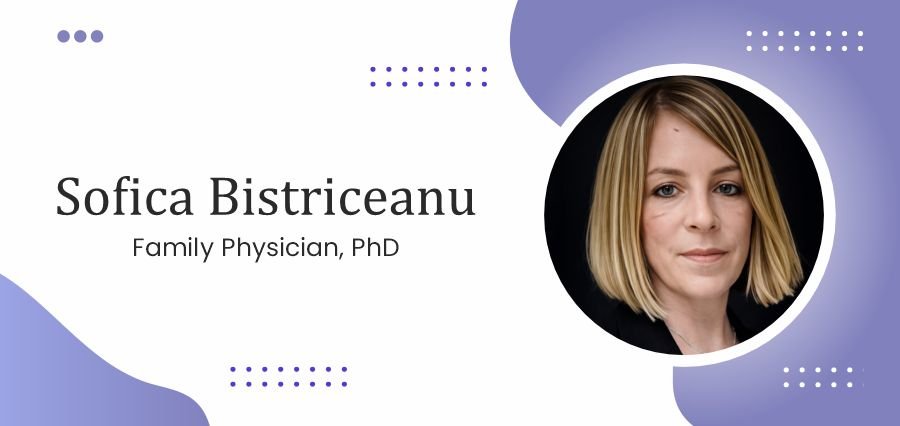
Academic Medical Unit-CMI Dr. Bistriceanu, S., NT, ROU
Family Medicine offers the unique advantage of observing people’s lives from birth through many stages of human development, sometimes even to the end of life. How they grow, interact, and use their capabilities is not always visible in office practice, but it is evident in their environment, where life happens. Visiting them at home and participating in community activities facilitate easy observation, providing a medical professional with a wealth of data relevant to the healing and prevention of human disorders.
No one can live in isolation; people must continually exchange goods and services to meet their own and their loved ones’ needs because no one can produce or know everything. How they do so, along with environmental characteristics, shapes their life path, including personal health.
The quality of products proposed for exchange, prices, cultural and geographical factors that help design the workplace, interaction skills during exchanges, and the reputations of players in a relationship, whether in virtual or real life, impact personal feelings either positively or negatively, according to the cumulative effects of the interplay of all variables.
In the healthcare industry, the delivery of medical services is evaluated by patients and their loved ones based on clinical outcomes, interpersonal skills, and service costs.
Expertise, coupled with heartfelt work, improves patients’ adherence to therapy plans and the management of their disorders, in line with their financial capacity and the time and resources available for reparative actions.
People in suffering need to be understood. Paying attention to their medical history, living conditions, and access to IT advancements facilitates a more precise diagnosis and treatment. These factors, incorporated into decision-making and backed by heartfelt encouragement and support, help them, especially in challenging times. Generosity, when needed, adds value in clinical practice for both the receiver and the provider, making it an impressive investment in the time ahead and revealing human value in troubled times. Its positive impact then extends to the community, since emotional and physical disorders are more easily remediated by offering financial support when people experience difficulty.
By collaborating closely with the patient and their loved ones, the main cause of the illness can be identified effortlessly. Best management of human disorder includes ameliorating suffering and eliminating, or at least diminishing, the main cause of moral and/or physical suffering.
From my experience, improper communication is the main cause of human disorders. The energy of harmful words can be transferred to vulnerable people during exchanges, initiating, maintaining, and even accelerating the development of major disorders such as arterial hypertension, type 2 diabetes, dyslipidemia, depression, and even brain hemorrhage or tumors in vulnerable individuals, depending on the magnitude of the energy, duration, repetition, and individual vulnerability.
People who are informed about the varied impacts of their interactions on their health can make better decisions when selecting collaborators to maintain their balance. Disloyal, unfriendly, dishonest, and disrespectful people harm their partners, causing disorders in them. In this era, people can block collaboration with them. Being marginalized, offenders can reflect on what happened and try to correct themselves, especially their bad name in the community stemming from their initial wrongdoings. The family physician is the best player in restoring community balance by observing and taking collective action to restore equilibrium. Informative programs, a hybrid model initiated in primary care, can help people manage their health journey. Equipped with foundational data on their potential disease onset and progression, they can make informed decisions for their health and a better life. With advances in IT, they can monitor essential parameters of their functioning: blood pressure, heart rate, blood glucose levels, and oxygen saturation. They can be instructed on how to use medicine, adjust dosage, and when to seek advice from experts such as virtual assistants or even real humans. This way, people will play an active role in managing their health journey.
People registered with disorders can opt for fee-for-service delivery in the practice office or at home, or for free services in medical centers operated by the national system.
Monitoring individual health through e-visits, e-follow-ups, e-prescriptions, and e-collaboration with other departments to ensure an accurate diagnosis demonstrates the efficiency of IT advancements in saving time and costs, including travel expenses, and in preventing burnout.
Working with a team requires better coordination of workflow volume and efficiency; being well-prepared for the job, flexible, open to improvement, and fair in decision-making promotes healthy relationships among team members, thereby attaining the intended goals. Work is incentivized when accomplishments are noted; errors in the production process will be judged differently: minor errors are common, moderate unintentional errors will be judged with heart, but major intentional errors will always be judged with a cool head.
Continuous updating of knowledge in this domain is possible at low cost in this era because many international educational meetings are organized in hybrid formats and explore varied themes, with experts from around the world sharing their experiences and research findings. Applying new data to the specific conditions of a real case makes medical practice more efficient and effective.
Finally, the medical professional’s work efficiency in the digital era is validated by the community’s attitude toward them: appreciation, respect, admiration, and even love, which can shine as a response during the provider’s possible transient troubles. A provider’s good name attracts new clients, increasing return on investment, maintaining business stability and growth, improving finances, facilitating career advancement, and enhancing inner life, creativity, and personal, professional, and social life.
It is better to prevent than to treat disease. Prevention saves a lot of money, thereby increasing quality of life and life expectancy.
Humans need attention, love, support in troubled times, respect, and appreciation of their accomplishments. They want to be treated with dignity and never have their value neglected.
Family Medicine Matters More Than Ever, as it works closely with individuals across the lifespan, offering heartfelt guidance at every stage. Through collaboration with stakeholders, it enables the implementation of informative programs in the community to promote a healthy lifestyle, prevent individual disorders, and support the pursuit of an excellent life path as one transitions through this ephemeral world. If they do not heed our advice, they will pay later for medical services, since each instance of inattention requires payment later.