
U.S. fast-food chains are discovering that simply offering cheaper meals is no longer enough to consistently bring customers through the door. After two years of aggressive value promotions, consumers are becoming more selective about what they consider a good deal.
Inflation has pushed millions of consumers to look for affordable dining options, making value menus and discounted meal bundles an important tool for fast-food companies. But recent results suggest that customers are now looking beyond the headline price.
The strongest-performing chains are combining affordable offers with new menu items, better food quality, convenience, loyalty programmes and improved restaurant experiences.
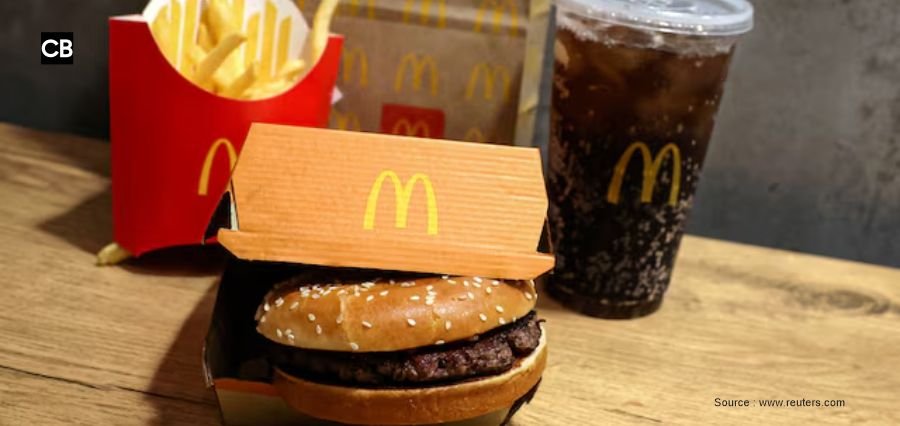
McDonald’s illustrates the challenge. The company offered an under-$3 menu and a $4 breakfast meal, but its global comparable sales increased only 1.3% during the second quarter. Chief Executive Chris Kempczinski said execution problems contributed to the weakness, with loyal customers accounting for roughly two-thirds of the traffic shortfall.
The results suggest that simply lowering prices cannot guarantee stronger customer traffic when consumers have many competing offers to choose from.
Taco Bell Shows How Innovation Can Make Value More Effective
Taco Bell has taken a different approach by combining clearly defined price points with menu innovation.
Its $5, $7 and $9 meal boxes have attracted budget-conscious customers while giving consumers reasons to spend more through additional menu choices. Rather than relying on constant discounts across its entire menu, the chain has used value products as an entry point while continuing to introduce new offerings.
Taco Bell’s strategy contributed to a 7% rise in same-store sales during the quarter, outperforming McDonald’s global comparable sales growth by a wide margin.
The difference highlights an important change in consumer behaviour. Customers still want affordable food, but they increasingly expect the deal to provide genuine value rather than simply advertise a low price.
When promotions become too complicated or appear designed mainly to encourage customers to spend more, consumers can become skeptical. Clear offers, attractive food and a convenient purchasing experience can make a value proposition more convincing.
This shift means restaurant chains are having to think about value more broadly. Price remains important, particularly for lower-income households, but it is only one component of the overall customer experience.
Wendy’s and Wingstop Struggle Despite Aggressive Promotions
The limits of discounting have been particularly visible among some restaurant chains that continued offering heavily promoted meals.
Wendy’s, whose Biggie Bag value meals start at $5, reported a 7% decline in U.S. same-restaurant sales and withdrew its annual forecast.
Wingstop also struggled despite promotions that included $1 chicken wings. Its U.S. same-store sales fell 7.5% during the quarter.
The weakness was especially pronounced in urban markets, where lower-income consumers are facing greater financial pressure. Wingstop reported that visits increased as much as 9% in higher-income markets, highlighting a widening difference in spending behaviour between consumer groups.
The results suggest that some customers are not simply switching between fast-food restaurants based on whichever company has the cheapest promotion. Instead, households facing financial pressure may be choosing to reduce restaurant spending entirely.
At the same time, consumers with greater financial flexibility appear more willing to pay for convenience, quality and a better overall experience.
This creates a difficult environment for restaurants because competing solely on price can reduce profitability without necessarily generating enough additional traffic.
Burger King and Domino’s Take a More Measured Approach
Some chains have demonstrated that restaurants do not necessarily need to be the cheapest option to attract customers.
Burger King has combined promotions such as its 2 for $5 and 3 for $7 offers with efforts to improve restaurant operations and menu quality. The company reported strong U.S. sales growth, suggesting that discounts can work when they are part of a broader strategy.
The key difference is frequency and creativity. Rather than offering deep discounts continuously, Burger King has used promotions selectively while simultaneously working to improve the customer experience.
Domino’s Pizza has also benefited from value-focused offers and loyalty initiatives that have helped attract customers and support sales.
Meanwhile, Chipotle has demonstrated another route to growth. The chain limited price increases to roughly 1% to 2% while focusing on convenience, menu innovation and operational execution.
This approach demonstrates that customers can accept modestly higher prices when they believe they are receiving sufficient value in return.
The Meaning of “Value” Is Changing
The fast-food industry’s latest results point to a broader change in consumer expectations.
For much of the recent inflationary period, value was closely associated with finding the lowest possible price. Restaurants responded with increasingly aggressive promotions, limited-time discounts and low-cost meal bundles.
But consumers are now becoming more sophisticated in comparing those offers.
A $5 meal may not seem like a bargain if the portion is smaller, the food quality is disappointing or ordering is inconvenient. Conversely, a slightly more expensive meal can represent better value when it offers higher quality, greater convenience or a more satisfying experience.
For restaurant companies, this means the next phase of competition will likely focus less on who can offer the cheapest meal and more on who can deliver the strongest overall value.
McDonald’s and its competitors therefore face a strategic challenge: they must continue providing affordable choices without allowing discounting to become the foundation of their entire business model.
The companies that successfully combine reasonable prices with better food, innovative menus, efficient service and strong customer loyalty are likely to have an advantage as consumers continue managing household budgets carefully.
The fast-food industry’s latest results make one thing clear: cheap is no longer automatically synonymous with value.